
How to Design a Kitchen That Works With Your Living Space
Most people renovating their kitchen stop at the kitchen door.
They spend weeks choosing cabinet finishes, obsessing over worktop materials, testing handle profiles in the showroom. And then they walk back into their living room and it all feels slightly… disconnected. The new kitchen is beautiful. The rest of the space just hasn’t kept up.
It’s one of the most common things we see — and it’s usually not noticed until the renovation is finished.
The problem with designing a kitchen in isolation
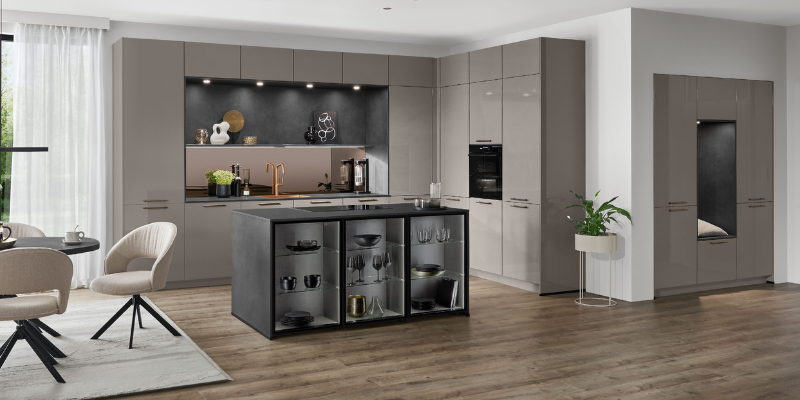
When you treat the kitchen as a separate project, you make decisions in a vacuum. You pick colours and tones that look great in your kitchen but clash with the lounge you can see from the same spot. You choose a layout that maximises kitchen efficiency but creates an awkward transition into the dining area. You invest in a premium kitchen that feels like a different house from everything around it.
In older homes, that wasn’t really a problem. Kitchens were separate rooms, closed off, hidden from view.
But most modern homes — and most modern renovations — are built around open-plan living. Your kitchen, dining area, and lounge are one continuous space. What happens in one directly affects how the others feel.
If you’re redesigning the kitchen without thinking about the full space, you’re solving half the problem.
What designing the full space actually looks like
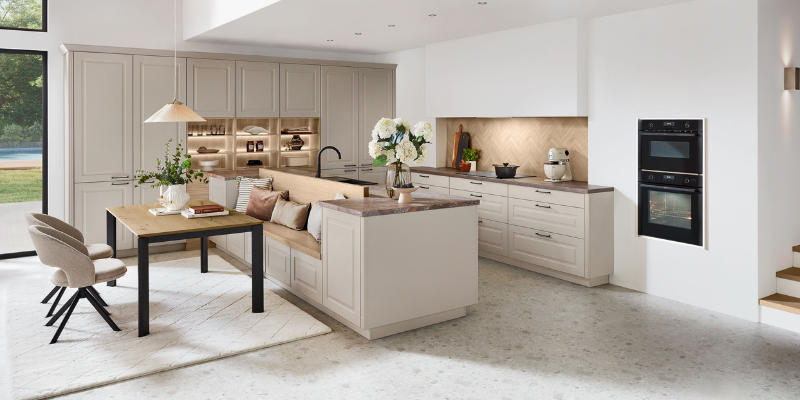
The most common error in kitchens that haven’t been professionally designed: the island was sized to fit the room, not to work in the room.
This doesn’t mean you have to renovate everything at once or spend more than you intended. It means thinking about how the spaces relate to each other before you commit to anything, so your decisions hold up across the whole room.
Here’s what that looks like in practice.
1. Start with sightlines, not just floor plans
Stand in your living room and look towards where the kitchen will be. That view is permanent — you’ll see it from the sofa every evening. Whatever finish, colour, or door style you choose for your kitchen units will be visible from that spot. So will your worktop, your lighting, and your open shelving.
When you design with sightlines in mind, the kitchen becomes something that enhances the whole room rather than sitting at odds with it.
2. Match the visual language across the space
German kitchen manufacturers like Nobilia and Schüller offer finishes, tones, and materials that extend beyond the kitchen itself — into wall units, media units, and storage solutions that carry the same design DNA as your kitchen cabinetry.
That’s where the real transformation happens. When the materials and tones in your kitchen units are echoed in the living space furniture and storage, the whole room reads as intentional. It’s the difference between a kitchen that was installed and a space that was designed.
3. Plan your storage as a whole
One of the underrated advantages of thinking across both spaces is storage. Kitchen renovations regularly uncover a familiar frustration — not enough room for everything that needs to live in the kitchen. But when you’re thinking about the living space too, you can redistribute. A well-designed wall unit in the adjoining space can take the pressure off kitchen storage and make both rooms more functional.
4. Get the flow right before you fix the layout
Traffic flow — how people actually move through the space — is the thing most likely to cause regret later. Where does someone walk when they come in from the hall? Where do people naturally gather when you’re cooking? Is the dining table positioned so guests feel part of the kitchen or shut out from it?
These are questions that only make sense when you’re looking at the full floor plan, not just the kitchen footprint.
5. Lighting is one budget, one decision
Lighting is often treated as an afterthought in kitchen renovations. It shouldn’t be, and it especially shouldn’t be when you’re dealing with an open-plan space. The lighting in your kitchen will affect the feel of the lounge in the evening. Colour temperature, direction, and layering need to be considered across the whole space, not just above the hob.
What designing the full space actually looks like
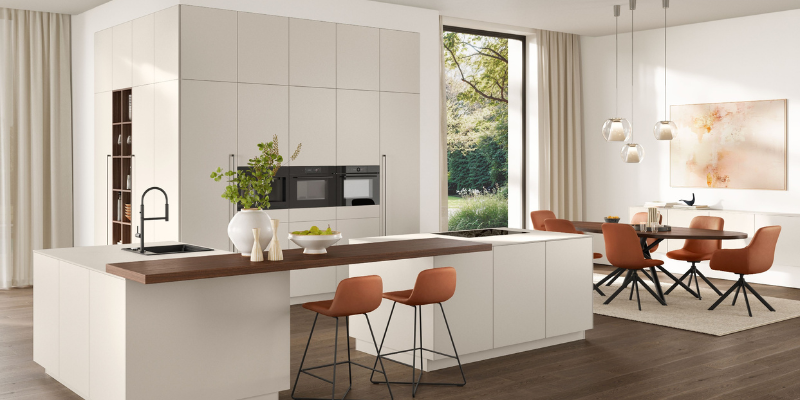
The practical reality is that coordinating a kitchen and living space renovation at the same time is almost always simpler — and more cost-effective — than doing them separately.
You have tradespeople on site once. Decisions about flooring, lighting, and colour are made together rather than revisited. And you’re not in the position, two years later, of trying to match a living space unit to a kitchen finish that’s no longer in the catalogue.
At A&S Home Design, we’ve been designing kitchens and living spaces together for over 30 years. The living spaces range we carry through Nobilia and Schüller means that the finishes, doors, and tones available for your kitchen cabinetry can extend directly into your living space — so the design holds across the whole room, not just behind the kitchen counter.
Where to start
If you’re planning a kitchen renovation and you’ve not yet thought about how it connects to the rest of your space, the best place to start is a visit to our Kirkintilloch showroom.
You’ll be able to see how kitchen and living space designs work together in a real setting — and we can start mapping out what that could look like in your home over a coffee.
👉 Come and see what’s possible in person
Recent posts

How to Choose the Right Kitchen Company in Glasgow
28 July, 2026
How Much Space Do You Need for a Kitchen Island?
3 June, 2026
28 July, 2026
How to Choose the Right Kitchen Company in Glasgow
There are a lot of kitchen companies in Glasgow — national chains, independents, trade suppliers, showrooms. They all say roughly […]
3 June, 2026
How Much Space Do You Need for a Kitchen Island?
You’ve fallen for the idea of a kitchen island. The extra worktop. The breakfast bar. The natural gathering point for […]
 23 April, 2026
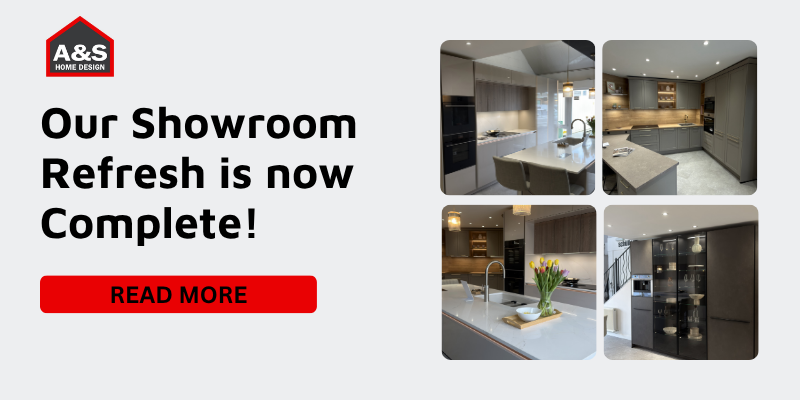
Some kitchens look better in photos. Ours is different in person at our Glasgow Showroom.
Here’s something we’ve noticed over the years: the people who visit our showroom rarely leave the same way they arrived. […]